
Alternative Materials to Silver and Gold in Jewelry Manufacturing
A practical B2B guide for brands navigating pricing pressure
Why Jewelry Brands Are Rethinking Precious Metals
For decades, silver and gold have been the default choices for fine and fashion jewelry. They are familiar, trusted, and easy to position. But the market has shifted. Price volatility, tighter margins, and consumer price sensitivity are prompting many brands to reconsider how much of their assortments depend on precious metals.
In practice, most brands are not “replacing” silver and gold completely. They are building a material mix strategy, keeping precious metals where they matter most, and adding alternative materials where they improve margins, stability, and scalability.
This is exactly the type of strategy we support at Salamander Jewelry. Alongside our precious metal production, we manufacture and supply strong alternatives, such as 316L stainless steel and brass-based collections, with professional finishing options, giving brands a practical way to expand product lines without being trapped by metal price swings.
What Brands Should Evaluate Before Switching Materials
1. Cost stability
Alternative materials help stabilize input costs, reduce price updates, and protect wholesale margins.
2. Durability and wear performance
The material must hold up to daily wear, moisture, sweat, and friction without looking “tired” after a few weeks.
3. Aesthetic flexibility
Brands need finishes that match their identity. High polish, brushed textures, color coatings, and premium plating are often more important than the base metal itself.
4. Manufacturing scalability
If a material is hard to produce consistently at volume, it becomes a growth bottleneck.
5. Customer perception
Materials like steel and brass require the right finishing and positioning to fit your brand tier and expectations.
Stainless Steel as a Core Alternative to Silver
Stainless steel has become a top alternative because it solves multiple problems at once: it is durable, widely accepted by customers, and more price-stable than silver.
Why brands adopt stainless steel now
- Better cost predictability for long-term collections
- Strong wear resistance with minimal tarnish issues
- Excellent performance in everyday jewelry categories (chains, rings, earrings, pendants)
Manufacturing and finishing options
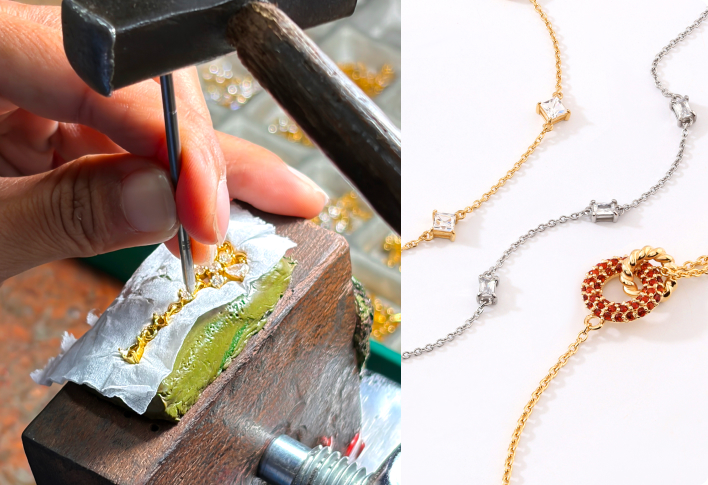
Steel can be elevated significantly depending on the finishing. High polish and modern coating solutions can make steel feel premium, not “cheap.”
At Salamander Jewelry, stainless steel is not an afterthought. We offer a large range of 316L stainless steel wholesale products across multiple jewelry categories, built for long wear and consistent presentation in retail and studio environments.
Practical B2B takeaway: If silver is squeezing your margins, steel often gives you the closest “metal jewelry feel” with less price stress.
Brass as a Cost-Effective Alternative to Gold
Brass is widely used in fashion and plated jewelry because it offers a strong balance of cost and design flexibility. It is especially useful when brands want the look of gold tones at scale, but cannot justify full gold or heavy gold content in the base material.
What brass does well
- Low raw material cost
- Easy to cast into detailed designs
- Great for trend-driven drops and seasonal collections
- Works well under plating and protective finishing systems
The concerns brands must manage
Brass can oxidize, and poor finishing can cause skin sensitivity for some users. This is where serious manufacturing matters.A brass program only works if the manufacturer can control
- Surface preparation
- Plating quality and thickness consistency
- Protective top coats or coating solutions that reduce discoloration
Salamander already supplies brass-based items and brass jewelry collections with professional coating options, including colored finishes that help brands hit gold-like looks and fashion tones without relying on gold content in the base metal.
Practical B2B takeaway: Brass is not a compromise when it is manufactured and finished properly. It becomes a margin tool.
Titanium and Other Alternative Brands Considered
Titanium
Titanium is a premium performance material with strong durability and corrosion resistance. It is often chosen for products where comfort, light weight, and long-term wear matter. Many brands position titanium as a premium alternative rather than a “budget” metal.
Mixed-material design
Many brands now build collections with mixed material strategies, for example:
- steel base with premium finishes
- brass base for plated looks
- titanium for performance-led SKUs
Salamander supports multi-material product strategies because we manufacture across categories and materials, allowing brands to manage cost tiers while keeping design consistency.
How Material Choice Changes Your Manufacturing Strategy
Switching materials impacts your entire pipeline, not only your product page.
Tooling and production setup
Different materials behave differently in casting, forming, and finishing. Manufacturers with real multi-material experience reduce risk during transition.
Minimum order quantities and scalability
Alternative materials often allow brands to scale faster and test new SKUs with less capital tied up than precious metal lines.
Lead times and repeatability
The biggest B2B advantage is repeatability. Stable materials and consistent finishing simplify forecasting and replenishment.
Salamander’s in-house manufacturing model is built around consistency and efficiency at certified standards, which helps brands avoid the “same SKU looks different every batch” problem when expanding into new materials.
How Brands Protect Perception While Changing Materials
This is the part most brands get wrong.
Use a tiered material architecture
A simple approach that works:
- Keep gold and silver for your hero pieces and premium line
- Use steel for everyday, durable core collections
- Use brass for plated fashion lines and statement drops
Sell finish and performance, not just the metal name
Customers respond strongly to:
- durability
- comfort
- color longevity
- scratch resistance
- tarnish reduction
If you position your collection around performance and design, the material switch becomes a feature rather than an apology.
Conclusion: Material Flexibility Is a Competitive Advantage
Rising gold and silver costs are forcing brands to make smarter decisions. The brands that win are not the ones waiting for prices to “go back to normal.” They are the ones building resilient collections by strategically using alternative materials.
Stainless steel brings durability and stability. Brass enables plated looks with strong margins. Titanium supports premium performance-driven SKUs. The key is choosing a manufacturing partner who can produce these materials consistently, with professional finishing and reliable repeatability.
That is the role Salamander Jewelry plays for brands and B2B buyers globally: supplying and manufacturing across these alternative materials so you can protect margins, keep quality, and scale with confidence.