
What Buyers Often Miss When Comparing Jewelry Suppliers
What Buyers Often Miss When Comparing Jewelry Suppliers
In practice, some of the most important differences between suppliers are easier to miss at the beginning — and more painful to discover later.
For brands, studios, and wholesale buyers, supplier comparison should go beyond the quote itself.
Price Is Not the Whole Comparison
A lower quote may look better at first, but price alone rarely tells the full story.
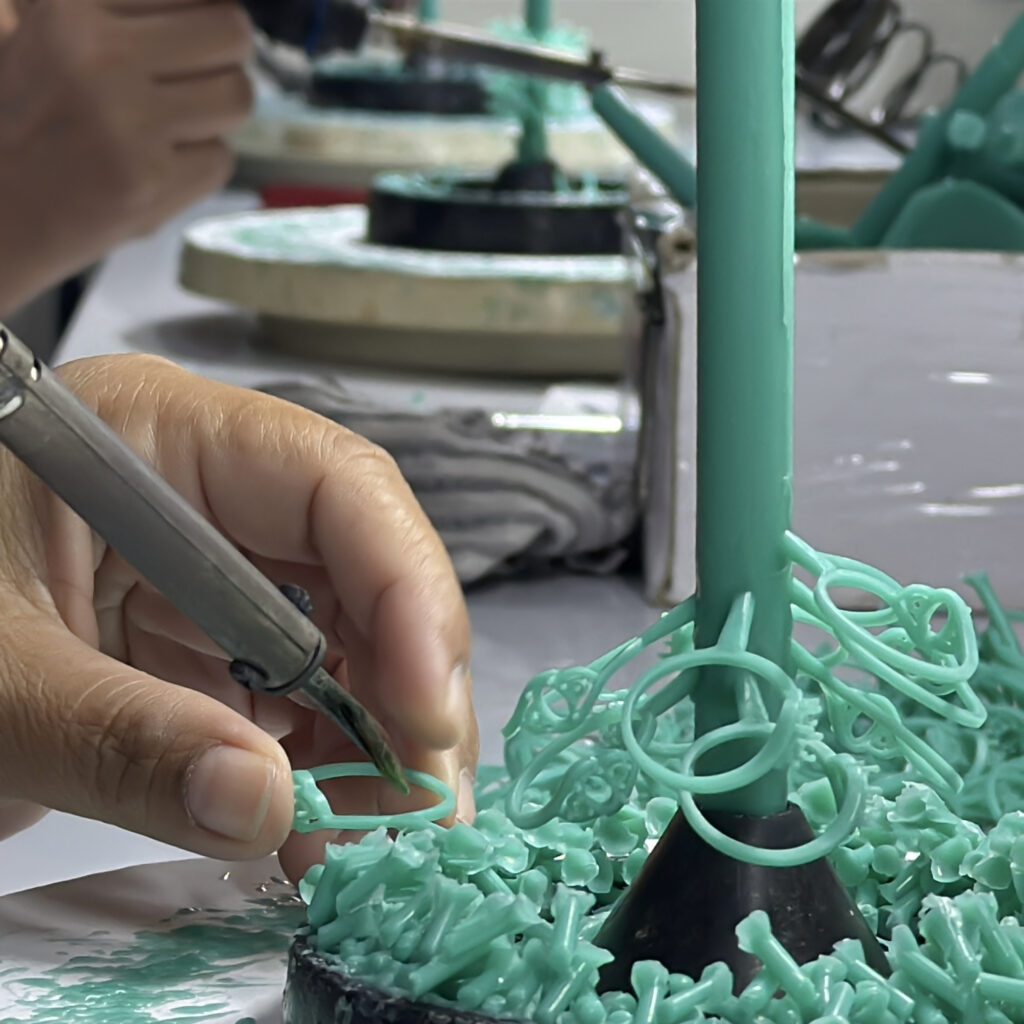
Two suppliers may price the same-looking product very differently because the real differences sit behind the visible item:
- material specification
- finish quality
- process control
- testing
- packaging accuracy
- communication standards
- production consistency
This is why a product should never be compared only on appearance and headline price.
Material Quality Often Gets Oversimplified
Many buyers compare by material name alone:
- silver
- gold
- steel
- titanium
But this is often too simplistic.
What matters is not only the category name, but also:
- the actual material standard
- how it is sourced
- how it is controlled
- whether testing or documentation is available
- whether the supplier is consistent across orders
This is particularly important when product performance, safety, or long-term quality perception matters.
For more on Salamander’s documentation and testing support, see our Metal Certificates page.
Finish Performance Matters More Than It First Appears
A product can look good in a first sample and still become a problem later if the finish does not hold up in real use.
That is why buyers should also compare:
- plating consistency
- coating method
- oxidation resistance
- anti-tarnish options
- finish control systems
These details are often overlooked during early quotation discussions, but they have a major effect on how the product performs once it reaches the customer.
You can explore Salamander’s finishing capabilities on our Coating page.
Communication Is a Production Variable
Communication is often treated as a soft factor, but in manufacturing it is not soft at all. It affects timing, accuracy, development clarity, and problem-solving speed.
A supplier that communicates clearly and consistently reduces friction across:
- sampling
- revisions
- approvals
- order confirmation
- production follow-up
- issue resolution
For long-term cooperation, this matters far more than buyers sometimes expect.
Can the Supplier Repeat the Result?
This is one of the most important questions, and one of the least discussed early on.
A supplier may produce one strong sample. That does not automatically mean they can repeat the same outcome reliably across multiple orders, finish variations, or scaled quantities.
That is where process control and quality systems become important. Repeatability is often what separates a dependable manufacturing partner from a short-term vendor.
You can read more about Salamander’s systems on our Quality Control & Assurance and Manufacturing Processes pages.
The Best Supplier Is Not Always the Cheapest or the Fastest
The best supplier is usually the one that can support the product properly over time.
That means looking at the full picture:
- product quality
- process stability
- finish performance
- communication
- documentation
- repeatability
- alignment with your brand needs
A supplier relationship becomes valuable when it reduces uncertainty, not only when it offers a low opening price.
Final Thoughts
Comparing jewelry suppliers properly means looking beyond the obvious. Price, lead time, and appearance are important, but they are only part of the decision.
The stronger comparison looks at the manufacturing system behind the product: materials, finish control, quality assurance, communication, documentation, and long-term consistency.
That is where the real difference is usually found.