
PVD Jewelry Coating Explained: What Brands Should Know Before Choosing Gold, Color, or Clear Film
PVD Jewelry Coating Explained: What Brands Should Know Before Choosing Gold, Color, or Clear Film
When buyers compare jewelry finishes, they usually focus first on how the product looks. Over time, however, the more important question becomes how the finish performs.That is where PVD coating has become increasingly relevant in modern jewelry manufacturing.For brands developing collections in steel, titanium, silver, or brass-based jewelry, coating is no longer just a decorative step. It affects durability, surface stability, color consistency, oxidation resistance, and long-term customer satisfaction. At Salamander Jewelry, coating is one of our key manufacturing capabilities, with options including PVD Color Sputter & ARC, PVD Anti-Tarnish Clear Film, electroplating, and anodizing for titanium.

What Is PVD Coating in Jewelry?
PVD stands for Physical Vapor Deposition. In simple terms, it is a vacuum-based coating process that applies an ultra-thin layer of material onto the jewelry surface. The result is a finish designed to be more stable and durable than many conventional decorative coatings.At Salamander, the Coating page explains that PVD offers increased hardness, enhanced durability, and superior resistance to oxidation. The company also highlights PVD Sputtering and ARC as advanced coating technologies used to create long-lasting finishes with strong surface bonding.For brands, this matters because the finish is often what the end customer sees, feels, and judges first. A good design can still disappoint if the surface does not hold up well in daily wear.
Why Brands Choose PVD?
There are several practical reasons brands are moving toward PVD-coated jewelry:1. Better durabilityPVD is widely chosen because it helps create a harder-wearing outer finish. This is especially useful for jewelry intended for regular wear.2. Stronger oxidation resistanceFor many collections, especially those positioned as everyday jewelry, resistance to oxidation and surface fading is a major selling point.3. More consistent premium appearancePVD helps create a refined, modern finish across gold-tone, rose gold-tone, black, and imitation finishes.4. A strong fit for steel and titanium collectionsSince Salamander already works with materials such as 316L Surgical Steel, Titanium ASTM F136, 925 Sterling Silver, gold, brass, and more, PVD becomes a useful finishing option across multiple collection types.If you want to review the material options we work with, see our Materials page.
PVD Gold and Color Coating
One of the most common commercial uses of PVD is color finishing.
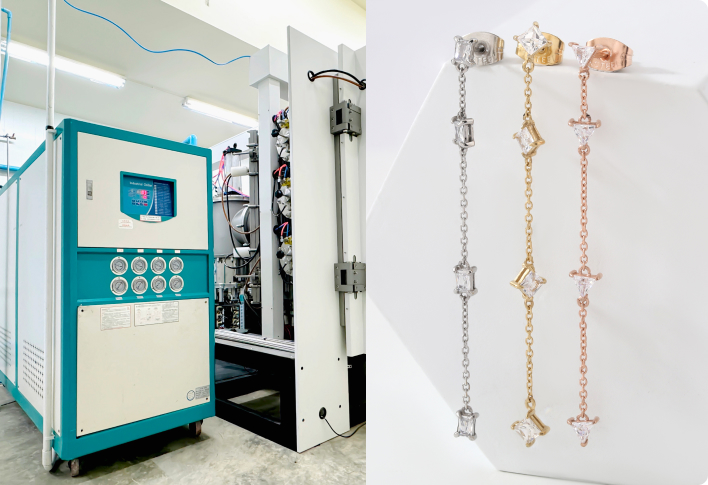
According to Salamander’s Coating page, the main color options include Gold, Rose Gold, and imitation finishes. These are designed to give brands a broader design range while improving wear performance compared with many traditional surface treatments.
For buyers, this means they can develop collections that:
- keep a premium gold-tone look
- offer modern color options
- reduce some of the concerns associated with softer or less durable finish layers
- support everyday-wear positioning
This is particularly relevant for brands that want the look of precious metal tones while keeping tighter control over product cost and pricing strategy.
What About PVD Clear Film?
This is one of the most interesting options for brands selling sterling silver or other items where maintaining surface appearance matters.Salamander’s PVD Anti-Tarnish Clear Film is positioned as a transparent protective layer designed to reduce oxidation while preserving the original look of the jewelry. On theCoating page, Salamander describes it as more durable and more eco-friendly than many traditional anti-tarnish coating approaches.For silver collections, this can be especially useful. Sterling silver remains a best-seller, but tarnish control is always part of the conversation. Our existing silver blog already explains that tarnish is a natural result of the alloy reacting with air and sulfur compounds, and that protective finishing can help delay it.You can also read our related article: Sterling Silver Explained: What Buyers Should Know.
PVD vs Traditional Plating
Traditional plating still has an important place in jewelry production. Salamander’s electroplating line supports finishes such as Copper, Silver, Rhodium, Gold, and more, with in-house XRF capability for plating quality and color consistency.
So this is not really about saying one method is always better than the other.
Instead, the better question is:
Which finish best fits the collection, use case, price point, and customer expectation?
In general:
- PVD is often preferred when durability and oxidation resistance are priorities
- Electroplating may still be the right choice for specific precious finishes, technical requirements, or aesthetic goals
- Clear protective film can be especially valuable when appearance retention matters
- Anodizing remains an important option for titanium finishes
Why Coating Should Be Discussed Early in Development
One common mistake brands make is leaving the finish discussion too late.
In practice, coating should be discussed early because it affects:
- material selection
- target price
- expected wear performance
- color development
- testing and quality requirements
- customer messaging
At Salamander, coating sits within a wider manufacturing and quality framework. Our site highlights rigorous quality systems, including testing and continuous improvement practices, as well as published material and product information through our documentation and certificates structure.
To learn more, visit Coating, Quality Control & Assurance, and Metal Certificates.
Final Thoughts
PVD coating is not just a technical detail. For many brands, it is a commercial decision that affects durability, customer satisfaction, product positioning, and the long-term performance of the collection.Whether you are developing gold-tone steel jewelry, color-coated titanium, or silver items with anti-tarnish protection, choosing the right coating system can strengthen both the product and the brand behind it.If you are reviewing coating options for a current or upcoming collection, contact Salamander Jewelry to discuss the best fit for your material, design, and target market.